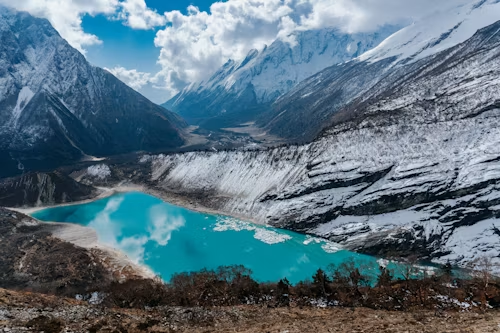
The Larkya La Pass is the crown jewel — and toughest section — of the Manaslu Circuit Trek. It is at an elevation of 5,160 m (16,929 ft) and provides views of Manaslu, Cheo Himal, Himlung, etc., as well as an out-of-this-world panorama of Annapurna II. But to tame this high-altitude pass, you need planning, timing, and clever strategy. Larkya La is usually the high point of the trek, with a high amount of pass crossing focusing on thin air, low temperature, and high wind.
A successful crossing begins well before you put a foot at the base of the pass. Good acclimatization is very important in order not to get altitude sickness. Ensure there’s at least one rest day scheduled into your itinerary at Samagaon or Samdo so that your body can acclimatise. Don’t rush yourself, stay hydrated, eat as much as you can, and ascend slowly. Physical fitness is also very important. Cardiovascular training, including strength workouts and multi-day hikes at home, to become accustomed to long trekking hours and the thin air you will experience above 5,000 meters.
Manaslu Circuit Nepal Most trekkers sleep at Dharmasala (also known as Larke Phedi) the night before the pass, the last lodge before the crossing. Note that lodgings here are simple and frequently packed out. Show up early in the day, sleep in a bed, eat a big dinner, catch some shut-eye. They leave the next morning in the predawn hours — usually between 3 and 4 in the morning — as the weather becomes more dangerous by midday at the summit. Being out early also provides more hours for gradual, unhurried ascending.
There is a long and gentle ascent to Larkya La. It isn’t very steep, but the high altitude makes even shuffling along a challenge. Walk at a steady, moderate rate, and don’t overexert yourself. Keep your breaks short so you don’t cool off too much in the cold. Be sure to have on warm layers and windproof clothes, and wear insulated gloves, with a buff or face cover as well, since temperatures can get well below freezing, particularly early in the morning. You also need sun protection — UV rays are strong at high elevations.
At the top, some time to enjoy the view and celebrate the achievement, but not too long. The drop through rocky moraine to Bimtang can be a 10-kilometer slog over snow and ice, particularly in the spring or late autumn. This section of the trail can be hard on the knees, so I would suggest bringing trekking poles to give stability. Advance slowly and make sure of your steps.
Larkya La isn’t just a physical obstacle; it’s a mental test, too. Fatigue, cold, and altitude can grind you down, so maintaining mental focus and positivity is crucial. A successful crossing of the pass is very doable with adequate preparation, a steady trek, and some local guidance.
Topping out on Larkya La Pass is one of the highlights of the Manaslu Circuit—a combination of classic Himalayan aesthetics and personal triumph. This epic mountain pass offers a truly surreal experience when you come with respect and are prepared.
What Is Larkya La Pass, And What Makes It So Special?
The Larkya La Pass, 5,160 meters (16,929 feet) above sea level, is the highest point along the Manaslu Circuit Trek in Nepal and one of the most dramatic, as well as one of the most grueling legs of this three-week journey. It is a point where the fertile Budhi Gandaki valley disappears and finally emerges in the drier region of the Marsyangdi valley.
For trekkers, this pass is of symbolic as well as logistic importance. It’s the one many others base their trek around — get over Larkya La and you’ve conquered the hardest part of the circuit. The way to the lake is quiet and wild, and stunning, making it a trekking hot spot for experienced hikers who are looking for a less developed trekking experience compared to the Annapurna or Everest areas.
Manaslu Circuit The weather can be brutal, and the altitude is no joke. The pass is usually snowed over, especially in the early spring and late fall, and visibility can often be limited. But, when done right, trekkers are greeted with the best views of Manaslu, Cheo Himal, Himlung, and the Annapurna range.
The challenge and elevation of Larkya La both test and reward you, but Larkya La is also what makes the Manaslu Circuit so memorable.
How do you prepare yourself physically for Larkya La Pass?
Larkya La Pass is no walk in the park. It needs months of serious physical conditioning before you ever set foot on the trail. You’ll be hiking at high altitude and may be doing so in freezing temperatures, while the climb itself might occupy 6–8 hours, dropping down from that summit subsequently. Without an appropriate fitness foundation, it’s easy to wear yourself out before you ever get to the top.
Begin training at least 8–10 weeks before focusing on cardiovascular fitness, leg strength, and core stability. Good cardiovascular exercises are running, stair climbing, trail hiking, and biking. Add to this some strength work, such as lunges, squats, and step-ups, to build those leg muscles for tackling hilly terrain.
Backpacking is also essential. Practice hiking up and down hills and over uneven surfaces while wearing a loaded hiking pack to simulate trail conditions. Use trekking poles if you intend to use them on the trek — they take pressure off your knees, particularly on the descent.
Lastly, be sure to add in rest days and flexibility work, such as yoga or stretching. It’s not just stamina that you’ll need, but the capacity to bounce back, day after day. A physically fit body makes high-altitude trekking much easier and is the best guarantee of a successful – and pleasurable – Larkya La crossing.
Signs of Altitude Sickness (And How to Prevent It)
Altitude sickness (Acute Mountain Sickness or AMS) is a threat on Larkya La, so be sure you are familiar with the symptoms. The pass is more than 5,000 meters above sea level, and oxygen levels are relatively low there, so every step is a chore for the body.
Early symptoms of AMS include headaches, dizziness, nausea to fatigue, shortness of breath, and trouble sleeping. If left unaddressed, AMS can develop into more dangerous forms of altitude sickness, such as high altitude pulmonary edema (HAPE, fluid in the lungs) or high altitude cerebral edema (HACE, swelling of the brain), which necessitate immediate descent and medical attention.
Slow ascent can help prevent AMS. Acclimatization days in Samagaon or Samdo are typically built into most itineraries as your body adjusts before the big climb. Stay well-hydrated, eat carbohydrate-rich foods, and avoid alcohol and sleeping pills.
Assuming you don’t have a contraindication (check with a doctor before taking Diamox), you can take Diamox to prevent symptoms by accelerating acclimatization. And, of course, listen to your body — don’t attempt to power through intense symptoms. Descend or rest if you are feeling unwell. There’s no dishonor in bailing; your health has gotta be priority one.
Making it over Larkya La is not just a matter of fitness, but also of how you handle the effects of altitude. Adaptation, knowledge, and pacing are everything.
What is the Best Time to Hike Larkya La Pass?
Manaslu Base Camp Trek Larkya La Pass is best crossed during the pre-monsoon (March to May) and post-monsoon (late September to early December) trekking seasons. These months boast the most dependable weather, clearest skies, and safer trail conditions — crucial factors when crossing high-altitude passes, such as Larkya La.
Mild temperatures prevail in spring (March–May), the days are long, and rhododendron forests are in full bloom, providing an impressive, colorful backdrop to the lower trails. Larkya La itself could potentially still have snow during March and April, but it’s usually crossable.
During autumn (September–November), post-monsoon air is clear, and the views are at their finest. Usually, it’s very dry, making it one of the safest and most beautiful times to drive over the pass. October and early November tend to be particularly busy.
Stay clear of the monsoon (June to August), when heavy rain, landslides, and leeches can be problematic, and the winter (late December to February), when the pass is typically snowbound and extremely cold.
Picking the right season is a huge factor in the safety and success of your crossing. Even during the best of months, be prepared to be flexible; the weather in the Himalayas can often have other plans, so it’s best to listen to your guide and be open to detours.
What’s the Day Going to be Like When I Cross Larkya La Pass?
The day you cross Larkiya La pass is probably the longest and most strenuous day of your Manaslu circuit trek. The majority of trekkers depart the following day for the Larke Pass at 3 or 4 in the morning, leaving from Dharmasala (Larke Phedi). The early start is essential because it is common for the weather to become dangerous on the summit before midday, and snow conditions can deteriorate as the day warms up.
It will take 3-5 hours to arrive at the pass, depending on your speed and acclimatization. The trail is not technical, but the altitude makes it hard to catch your breath, and you move quite a lot slower. The pathway is typically rocky and may hold snow and ice, particularly in spring and late fall.
Climb Manaslu At the top, you’ll be graced with panoramic 3360-degreevistas over Himlung, Cheo Himal, Kang Guru, and Annapurna II. The summit is marked by prayer flags and a signboard — a wonderful place to capture some photos, but don’t stay too long as it can get very cold and windy.
It’s another 3–4 hours from there (and your knees) down to Bimtang. The path descends steeply and could be icy, so take trekking poles. Listen to your body and maintain your pace, and try to keep eating high-energy snacks.
The Larkya La crossing is a grand achievement—take your time, take it easy, and enjoy.
What Equipment Do You Need Specifically for Larkya La Pass?
You’ll need the normal trekking stuff for the Manaslu Circuit, but for Larkya La Pass, there are some extra layers of preparation required, because it’s high and challenging up there! The secret to success on pass day is having the right clothing and gear to endure freezing temperatures, high winds, and snow or ice.
Begin with a top-quality down jacket, good for 0-degree weather. Pair it with a fleece mid-layer and a moisture-wicking base layer, and your core will stay warm and dry. Include insulated gloves, a thermal hat, and a neck gaiter or balaclava (it’s important to protect your face from windburn and frostbite).
Your trekking boots must be waterproof and well broken-in with good ankle support. Gaiters are also nice if it’s deep with lots of snow. Don’t forget a headlamp — you’ll begin your ascent before sunrise — and pack extra batteries because the cold sucks the life out of them.
Trekking poles are a necessity on the way up and downhill, especially if the trails are icy. Take sunglasses (UV-protective), sunscreen, and lip balm to protect from the strong sun at high altitude.
Lastly, take high-energy snacks, water purification tablets , and a well-insulated water bottle. Hydration and calories matter more than ever on pass day. Smart packing can make or break a trip.
How Cold Is It on Larkya La Pass?
It can be freezing at Larkya La Pass, particularly as trekkers descend in early afternoon. Pre-dawn temperatures generally vary between −10°C and −20°C (14°F and −4°F), depending on the season and the effect of the wind. Even in the mild, warm, or cool seasons in spring or autumn, it’s icy up here before dawn.
Wind can make it even more brutal. The pass is exposed, and strong gusts have the potential to shave the wind chill down below what the mercury indicates. This is also why an early start is both a weather and safety strategy — the weather turns worse as the day goes on.
It might get a little warmer once the sun comes up, but you will still want several layers to keep warm, particularly on breaks, when your body temperature can plummet. It is a real possibility to succumb to hypothermia or frostbite if you are underdressed or you stop moving steadily.
Manaslu Circuit Trekking Wear layers that you can remove or adjust easily: a base layer, a fleece or softshell layer, and then an outer insulated or down layer. Wear thermal socks, waterproof boots, and insulated gloves or mittens. Staying dry is as crucial as staying warm, so steer clear of cotton and try to don moisture-wicking, quick-drying material.
All in all, Larkya La is cold — but with the right clothing, it’s perfectly survivable.
Can You Cross Larkya La Without A Porter?
Strictly speaking, you could cross Larkya La without a porter, though it is far from ideal unless you are already a high-altitude trekker who’s very comfortable lugging their fully loaded pack uphill in difficult conditions. The day you cross the pass is a long one — generally 8 to 10 hours of high-altitude trekking — and with a porter, you’ll be far less tired and more likely to make it.
Most of your heavy gear is carried by porters, so you can concentrate on walking with a light daypack (and carrying just essentials like water and snacks, extra layers, and personal items). Without one, you are going to be lugging around 15–20 kg, making you slow, making you tired, and putting you at higher risk of getting tired or even altitude sick.
In addition to lightening the load, porters also provide an added level of security and local expertise. They know their way around and can help in the event of emergencies. Even balance is easier on icy or snow-covered sections when there’s no heft to be weighed down by.
If you’re on a budget, you could split a porter with another member in your group. This way, you won’t be overwhelmed, but the costs remain reasonable.
Although it’s not obligatory as a guide, hiring a porter for Larkya La is not only about convenience — it’s about giving yourself the best chance of a safe and fun crossing.
What if Larkya La Pass is Closed Due to Weather conditions ?
Should the weather shut the pass, safety will come first. Intense snowstorms, high winds, or whiteouts can render the trail unpassable. Your guide will judge the condition, and you might have to wait in Dharmasala or Samdo for the situation to get better.
Manaslu Trekking It’s frustrating, but waiting happens all the time on high Himalayan passes. Buffer days are also included in most guided treks for this very reason. If you are trekking independently (with a guide, which is mandatory), be sure to include an extra 1–2 days in your itinerary to account for rain delays.
In extremely rare situations, trekkers may be forced to turn around if the weather doesn’t improve for days at a time. For it to fall flat is disappointing, certainly, but it’s got to be better than the risk of an incomplete pass in dangerous weather conditions. Your guide may suggest other paths for evacuation, if necessary, based on your health, location, and resources.
Weather apps and local tips can help anticipate storm patterns, but the weather in the mountains is an unpredictable thing. Travel with extra food, warm gear, and some extra cash in case you get stuck for a day or two.
The key takeaway? Adaptability and patience are key in the Himalayas. Trust your guide, assess the condition, and never go over the pass if advised otherwise by the locals.
What is the descent after crossing Larkya La like?
Larkya La Pass Summit followed by immediate downhill — long, steep, tough. You’ll lose nearly 1,400 meters (about 4,600 feet) in a day, dropping down to the stunning alpine valley that brings you to Bimtang, where you’ll spend the night.
The path down is tricky and usually snowy or icy, with the trail being snow-covered in winter. This section is harsh on the knees and ankles, so using trekking poles is recommended. Balance and controlled steps are important on this slippery terrain.
Past the snow line, you’ll travel across rocky moraine, grassy slopes, and through thick, verdant jungle. The descent will require 3-4 hours, depending on trail conditions and your fitness level after the strenuous ascent. A lot to be said (by the exhausted, the young, and Optimum addicts – like us) and bemoaned about the “downhill”.
The descent, while gruelling, is spectacular — razor-like peaks at your back, river valleys below, and a certain satisfaction that you’ve earned it.”).. when “ugly mug”, “the end of the road” […]. When you finally get to Bimtang, better lodges and hot food, a welcome finish to a long, difficult day.
Prepare mentally and physically for this downhill walk – it’s the culminating challenge for the crossing of the Larkya La.
How High Is Larke Pass?
Everest Base Camp Trek The trek’s highest point, Larke Pass (also called Larkya La Pass), towers at 5,160 metres (16,929 feet) and is the highest point of the Manaslu Circuit Trek. Set in the Gorkha region of Nepal, this challenging high mountain pass provides a dramatic and epic pass crossing from the Budhi Gandaki into the Marsyangdi valley.
It is high enough to be at some risk for Acute Mountain Sickness (AMS), so you MUST acclimate. Most itineraries incorporate a day or two of rest, usually in Samagaon or Samdo, so trekkers can acclimatize to the thin air before ascending the pass.
Larke Pass is not only high, but also exposed. High winds and subzero temperatures are typical, especially after midnight when most climbers start. Snow and ice can even be found in peak months such as October and April.
It may be a tough climb, but the views from the top are stunning. On a clear day, you’ll enjoy sweeping views of Manaslu, Himlung Himal, Cheo Himal, and even parts of the Annapurna range. For most people, reaching Larke Pass is the most rewarding — and unforgettable — aspect of the entire Manaslu Circuit trip.
How Hard Is the Larke Pass?
Larke Pass is one of the toughest high passes of a trek in Nepal — not technically, but the altitude, terrain, and duration of the day make it tough. Hikers generally take 8 to 10 hours to hike to the pass, beginning at Dharmasala well before sunrise and dropping down into Bimtang.
The ascent from the road to the top of the pass is steady, if not punishing. You’re already high (at 5,160 meters) each step is laborious, especially for those not well-acclimatized. The trail is also frequently snow or ice-covered in spring and late fall, which makes it more challenging. You’ll need trekking poles, crampons (in icy conditions), and layers of cold-weather gear.
The way down is no cakewalk either — long, steep, and grueling on the knees. You’ll plummet almost 4,300 feet in a couple of hours, and that can be as grueling as the climb.
Also, fitness, readiness, and mental toughness are key. Normally fit trekkers who have acclimatized well should be able to cross the pass safely. However, it is not a day one should take lightly.
To put it simply, Larke Pass is tough —but not too tough. It’s challenging, but with a common-sense pace, the right gear, and some guidance, you can beat it – and get one of the most rewarding badges in Nepal hiking.
Is Manaslu More Difficult Than Everest Base Camp?
The Manaslu Circuit Trek is more challenging in many ways than the Everest Base Camp (EBC) Trek, which is nonetheless famous and high profile. The variation in remoteness, altitude change, terrain, nd infrastructure are the primary differences.
First, Manaslu is not as developed as the Everest area. Trails are quieter, accommodations are more basic, and services such as Wi-Fi, hot showers, and food options are restricted. That introduces another level of self-sufficiency and challenge that EBC doesn’t always call for.
Second, Larke Pass (5,160 meters) is every so slightly lower than Everest Base Camp (5,364 meters) – but that didn’t make the pass day less physically challenging than hitting EBC, where you don’t cross a high pass and steeply descend right after.
Manaslu also needs both special permits and a compulsory guide, which complicates logistics. You will also see fewer other trekkers on the trail, which translates to being further afield in the case of an emergency.
That said, Everest has its problems: altitude, fame, and crowding among them. But for trekkers in search of a wilder, quieter, and more strenuous route and spectacular mountain views, Manaslu tends to present the more challenging and adventurous alternative.
How Hard Is the Manaslu Circuit Trek?
The Manaslu Circuit Trek is considered moderate to challenging, the difficulty dictated primarily by elevation, isolated terrain, and duration. It is not a technical climb — no ropes or climbing gear are necessary — but the cumulative elevation gain, challenging trail, and high-altitude Larke Pass make it an arduous endeavor.
The trekking route covers around 177 kilometers (110 miles) in 14–18 days, with 6 and 8 hours of walking per day. The trek leads you through sub-tropical forests to high-altitude alpine areas, with significant ranges in geography and weather. The main obstacle is crossing over Larke Pass (5,160 meters) with a grueling approach and vertiginous, icy descent — all of it under oxygen-deprived conditions.
Basic amenities to make the place comfortable are scarce and only make the struggle tougher. Some of the villages have limited culinary choices, cold showers, and shared rooms. Weather — including snow, rain, or landslides — can also make the hike even more difficult.
Everest Base Camp But with the right level of fitness, gear prep, and acclimatisation, most reasonably fit and determined trekkers can manage the Manaslu trek. A well-thought-out itinerary, a knowledgeable guide, and a flexible attitude all make a big difference.
Manaslu is ideal for trekkers who want solitude, masochistic natural beauty, and a sense of challenge without the traffic of the Everest region.